
By: Charles Gachoki, Ng’ang’a Kibandi and Victor Saoke
Why Transforming teacher education enhances learning experiences of learners at all levels
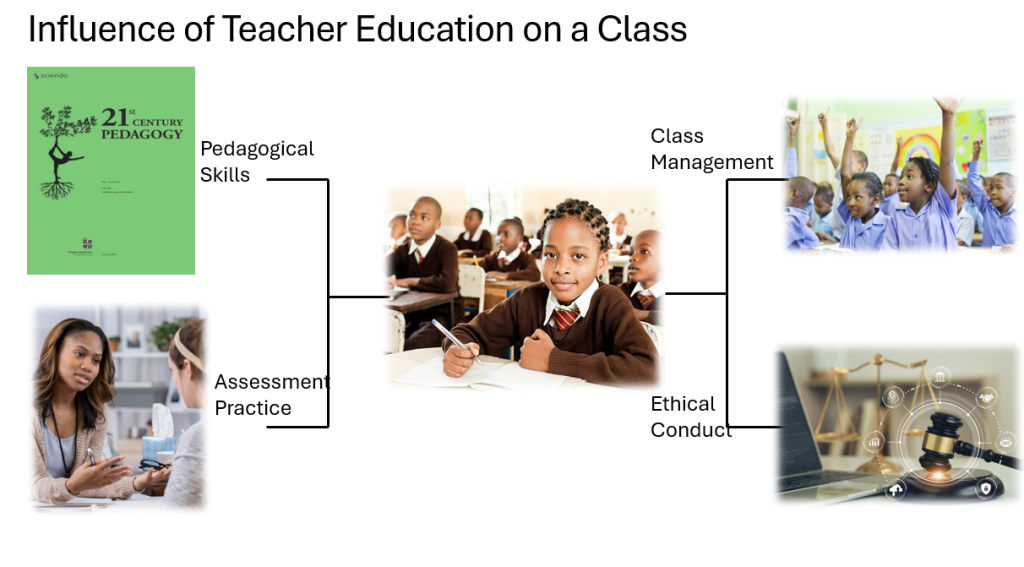
“I had the privilege of attending what was considered a posh public school, or at least, that’s what we were made to believe in the late 1980s into the early 1990s, when schooling was a truly unique experience. The staffroom was a place to be feared, and the classroom was where discipline was firmly instilled. Teachers were the ultimate authority; they spoke, and we acted. The rules were clear, and so were the consequences of breaking them. Based on that experience, I was certain I would never pursue a career as a teacher or an educator. But life, as it often does, had its own sense of humor”
We welcome you to walk this journey as narrated by Prof. Baraza at the Education Evidence for Action Conference (EE4A) 2025 at the University of Embu.
The classroom: The heart of education’s endless Loop
Walk into any classroom (a university hall, teacher training college, primary, or secondary), and you’ll see the obvious: students learning. But look closer, and you’ll witness something far more profound, a dynamic, symbiotic dance of learning and teaching, of theory and practice, of being and becoming. The classroom is not a passive container for education; it is its living, breathing, and most vital organ. It is both the theatre where pedagogical practices are executed and the laboratory where they are tested and reinvented.
“The child is the father of the man” -William Wordsworth (1802)
This intricate dance reveals a powerful feedback loop between how and what children learn and how and what teachers are taught. It’s here that the central, transformative role of the teacher comes into sharp focus.
The classroom: An arena and a laboratory
As a theatre, the classroom is where the abstract meets realism. Curriculum theories developed in universities, pedagogical “best bets” debated in conferences, and assessment models designed by policymakers all meet their ultimate test here. It’s the stage where the script of education is performed.
But more importantly, the classroom is a laboratory where the lead scientists-teachers put what they learnt and were taught to the test. They experiment with the theories learned during their teacher education, adapting, tweaking, and sometimes discarding them entirely. They innovate as they go about the teaching, developing new approaches born from the immediate and contextual needs of their students. A lesson on fractions becomes an experiment in multisensory learning.
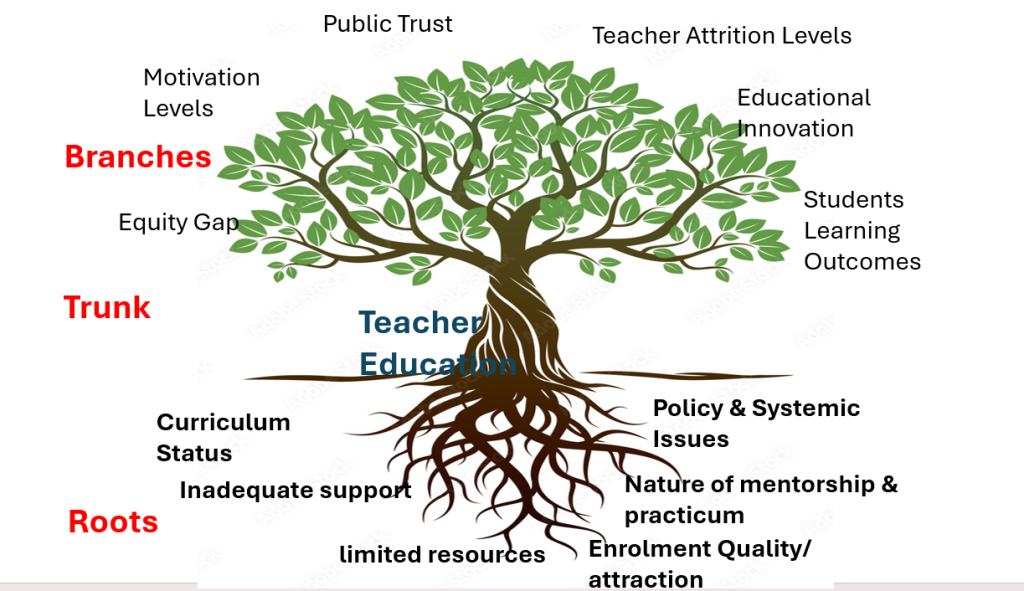
This is where the three pillars of teacher training are forged in the fire of reality:
-
- Subject Content: Knowing math is one thing; explaining it to a confused 1st grader is another. The classroom contextualises knowledge.
-
- Pedagogical Skills: A lesson plan is a hypothesis; the classroom is where it’s proven true or false, leading to constant refinement.
-
- Professional Values: Ideals like patience, equity, and inclusion are tested daily in the classroom, where they are lived and transformed from concepts into core principles.
The Teacher: The dynamic driver of the system
This process highlights the undeniable truth: the teacher is the most critical agent in the education system. They are the interpreters of curriculum, the facilitators of learning, and the human bridge between policy and the learner.
But, teachers are not static vessels of knowledge but dynamic professionals in a constant state of “being and becoming.” Their practice is shaped by a confluence of forces:
-
- Prior Learning: Their own experiences as students deeply inform their teaching philosophy, what to emulate and what to avoid.
-
- Teacher Education: The foundational theories, methods, and ethical frameworks provided during their training.
-
- Classroom Contexts as the ultimate reality check: The immediate reality of their students’ diverse backgrounds, abilities, and needs.
-
- Professional Experience and Reflection: The daily practice, the failed lessons, the unexpected breakthroughs, and the conscious act of reflecting on what works is where true expertise is born.
Challenges to the symbiosis: When the loop is broken
Despite its ideal function, this symbiotic relationship often faces significant challenges that can break the feedback loop.
-
- Gaps in continuous teacher education: Teacher training often doesn’t end with a degree; it must be a continuous process. However, many systems offer fragmented, one-size-fits-all professional development that isn’t responsive to the specific challenges teachers identify in their classrooms. This gap leaves teachers without the ongoing support to integrate new research, technologies, or pedagogical strategies effectively.
-
- The technological divide: The rapid pace of technological change has created a stark divide. Teacher education programs may struggle to keep up, leaving new teachers unprepared to use digital tools. Conversely, schools may lack the infrastructure, leaving even the most tech-savvy teachers unable to implement what they know. This divide can disconnect teacher training from the modern classroom’s reality.
-
- Theory to practice Dichotomy: Sometimes, the theories taught in universities can feel abstract and disconnected from the chaotic, local classroom context of overcrowded and unique individuals. Without proper support, new teachers can experience “practice shock,” abandoning theory rather than learning to adapt it.
Using data to bridge the gaps
For the symbiotic relationship to evolve from philosophical to powerfully practice, it must be fueled by realistic evidence and credible data. Moving from anecdote to empirical is what turns the classroom laboratory into a true engine of improvement. Data provides the objective feedback needed to close the loops.
-
- Formative assessment data: When teachers use quick polls, error analysis, or questioning techniques, they gather real-time data on student understanding. This immediate evidence allows them to adjust their instruction on the fly—a process known as adaptive teaching.
-
- Student work and portfolio analysis: Systematically examining student work provides rich, qualitative data on the effectiveness of assignments, the clarity of instructions, and where misconceptions lie. This evidence is crucial for teachers to refine their pedagogical strategies.
-
- Learning analytics and EdTech: Educational technology, when used equitably, can provide detailed analytics on student progress, engagement levels, and knowledge gaps. This data can help teachers identify struggling students early and tailor interventions more effectively.
-
- Action research: When teachers engage in action research, posing a question about their practice, experimenting with a change, and collecting data on the results, they become generators of evidence. This empowers them to contribute directly to the body of educational knowledge, ensuring that teacher education is informed by the realities of the classroom.
Strengthening the symbiosis: A data-informed blueprint for the future
For the virtuous cycle of learning and teaching to thrive, we must consciously strengthen the connection between the teacher’s training and the classroom’s reality, using evidence as the compass.
-
- Embedding classrooms in training: Expand school-based practicum and mentorship, ensuring student teachers learn to collect and interpret classroom data from their mentors. This makes evidence-based practice a foundational habit.
-
- Fostering Collaborative Data Partnerships: Create structured partnerships between teacher training colleges, universities, the Teachers Service Commission, and schools focused on data sharing. Universities can help schools analyse outcome data to identify trends, while teachers can provide real-world context to academic research, making it more curriculum relevant.
-
- Investing in Data Literacy and Equity: Investment in resources must include training for both new and experienced teachers on data literacy, how to interpret assessment results, learning analytics, and qualitative evidence to inform instruction. This investment must be equitable to ensure all schools can participate.
-
- Championing Evidence-Based Reflective Practice: Move beyond general reflection to evidence-based reflective practice. Support teachers through coaching and professional learning communities to use data, from test scores to student surveys, to set specific professional goals, measure their impact, and feed these evidence-informed insights back into teacher education programs.
The relationship between teacher education and the classroom is a vibrant, endless loop, but it is not self-sustaining. It requires intention, investment, and collaboration. By embracing evidence and data, we move from guesswork to guided practice. By confronting challenges with a data-informed lens and by actively embedding training in real classrooms, fostering analytical partnerships, and investing in data literacy, we can strengthen this symbiosis. This will empower teachers fully in their dynamic state of “being and becoming.” We ensure that the classroom laboratory, fuelled by evidence, continues to generate the innovation and feedback that drives a responsive, relevant, and truly transformative education system for all learners at the University and at the foundational level.
Ng’ang’a Kibandi is the Director, Partnerships and Advocacy at Dignitas
Charles Gachoki is the Research Manager, Zizi Afrique Foundation
Victor Saoke is a PhD Student at the University of Embu